Guides · July 20, 2026 · 4 min read
What to Automate First With an AI Employee: A Simple Test
Not every task makes a good first AI workflow. Use one simple test, high frequency, clear rules, and low risk, to pick the one that pays off in the first week.
By The Kolo Team, Kolo AI
The wrong question, and the right one
Most people start with "what is the most painful thing in my business?" and point the AI employee straight at it. That is the wrong question, because your most painful problems are usually the ones full of judgment calls, exceptions, and real consequences. They are the last thing you want a new hire touching in week one, human or otherwise.
The right question is narrower: what is the highest-volume, lowest-drama task I do over and over? The best first workflow is not your biggest problem. It is your most repetitive one. You are not trying to transform the business on day one. You are trying to prove a pattern you can trust and then repeat.
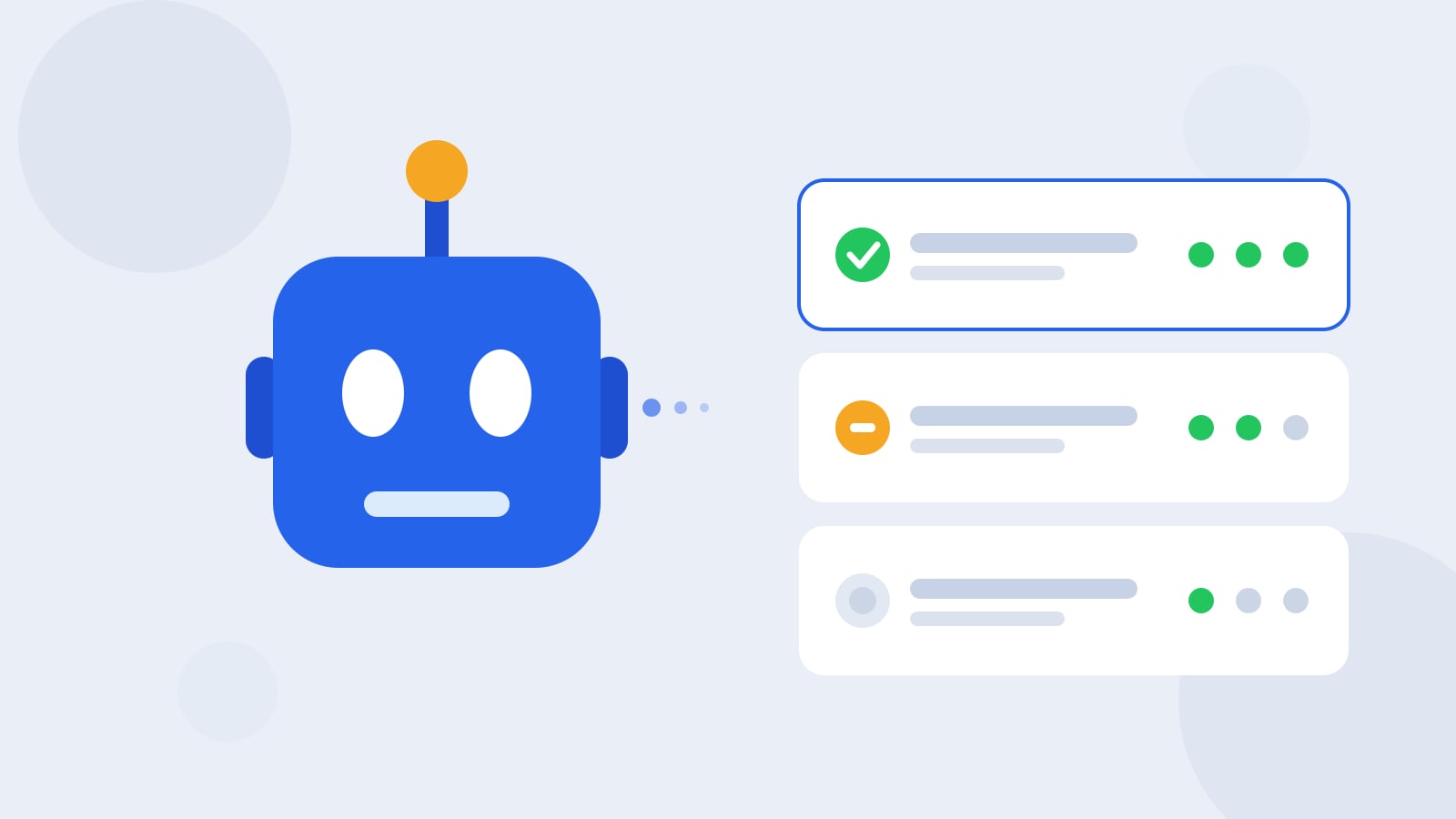
The three-part test
A good first workflow passes all three of these. Two out of three is a maybe. One out of three is a later project.
- High frequency. It happens daily, or many times a day. Frequency is where the hours are, and it is also how you build trust fast: you see the agent handle the same task dozens of times in a week, so you learn quickly whether it is reliable.
- Clear rules. You can write down what to do, in what tone, and when to escalate to a person. If briefing the task would take you three pages of edge cases, it is not your first workflow. If you could hand it to a new hire with a short paragraph, it is a strong candidate.
- Low risk. If the agent gets one instance wrong, the cost is small and reversible: an awkward message you fix in seconds, not a lost client or a refund. Low risk is what lets you move quickly at the start.
Score your candidates honestly against these three. The workflow that wins is almost never the one that first came to mind.
Run the test on real work
Here is the same test applied across the industries we see most. Notice the pattern: none of these is glamorous, and every one of them is relentless.
- Restaurants. Drafting a reply to every Google and Yelp review. High volume, simple rules, and a wrong draft is just an edit before it posts.
- Real estate. First-touch follow-up on new leads within seconds, then qualifying and booking. It happens all day, the script is consistent, and speed alone wins deals.
- Healthcare and clinics. Appointment reminders and simple reschedules. Daily, rule-driven, and a mis-sent reminder is a quick correction, not a clinical decision.
- Legal. New-client intake triage: collecting the basics, checking for conflicts to flag, and routing to the right person. Frequent, structured, and the agent flags rather than decides.
- Construction and home services. Chasing unpaid invoices politely and confirming tomorrow's jobs. Both are repetitive, follow a clear cadence, and are easy to review.
Across all of them, the "automate first" answer is the same shape: a high-frequency message-and-follow-up task with clear rules, where a human still approves the ones that matter.
Why low risk comes first
Low risk is not timidity. It is how you earn the right to automate the harder stuff.
Kolo keeps a human in the loop, calibrated by risk. It rates each action low, medium, or high, and pauses the ones that carry real impact for a person to approve, while routine low-risk steps keep moving. A safe first workflow means most actions land in the low tier, so your approval queue is light and you spend the first two weeks confirming that the agent's judgment matches yours. Every action and approval lands in a complete, exportable audit trail, so you can always answer who approved what.
Once a workflow is boring, you loosen the reins on that one and move to the next. You do not flip the whole business to autonomous at once. You graduate one workflow at a time, and the risk tiers make that a dial you control rather than an all-or-nothing switch.
The same test, three different payoffs
The test does not change whether you are one person or a thousand. The payoff does.
- Solo operators should automate the task eating the most of their own evenings. The goal is hours back, and one high-frequency workflow can return several a week.
- Teams should automate a shared queue and let roles decide who approves what. Reviews, reminders, and lead follow-up become one queue the right person clears in a few minutes, instead of scattered work nobody owns.
- Enterprises get the same first workflow plus the controls that make it safe at scale: model choice with monthly spending limits per group, roles for who can approve, and one audit trail across everyone. The workflow itself also becomes a durable asset. When a Team Member turns it into a Kolo Skill, the steps and know-how stay with the company instead of leaving when they do.
Start with one, measure one number
The rollout is the same everywhere. Pick the one workflow that passes the test. Write the brief the way you would for a new hire: what to do, what tone to use, what never to do, and when to escalate. Run it with approvals on and read what the agent proposes for two weeks. Then measure one number, whether that is hours saved, response time, or rebooking rate, so everyone can see whether it worked.
Add the second workflow only after the first one is boring. Teams that follow this path are usually running three or four workflows within a couple of months, with the owner reviewing a short queue for a few minutes a day.
Kolo is built for exactly this: 150+ integrations with the tools you already use, risk-based approvals, a full exportable audit trail, and a shared workspace that also reaches Slack, SMS, and a mobile app. If you want to see what your first workflow could look like, Book a Demo.
Frequently asked questions
What should I automate first with an AI employee?
Pick the workflow that scores highest on three fronts. It happens often, it follows clear rules, and a mistake would be low impact. Review replies, appointment reminders, and first-touch lead follow-up are common first hires because they check all three boxes.
How do I know a task is low risk enough to start with?
Ask what happens if the agent gets one instance wrong. If the answer is an awkward message you can correct in seconds, it is a safe first workflow. If the answer is a lost client, a refund, or a compliance issue, save it for later and keep a human approving each step.
Should I automate my hardest problem first?
No. Your hardest problem usually involves judgment, exceptions, and high stakes, which is the worst place to build trust. Start with a boring, high-volume task, prove the pattern, then expand to harder work once approvals feel routine.
Does the first workflow look different for a solo operator versus a team?
The test is the same, but the payoff differs. A solo operator buys back their own hours. A team clears a shared queue with roles deciding who approves what. An enterprise adds spending limits per group, model choice, and an exportable audit trail across everyone.