Guides · November 9, 2026 · 5 min read
The Restaurant No-Show Playbook: Recover the Empty Table
No-shows quietly drain a restaurant's best nights. This playbook shows how an AI employee runs the reminder cadence, makes rescheduling easy, and backfills empty tables from your waitlist.
By The Kolo Team, Kolo AI
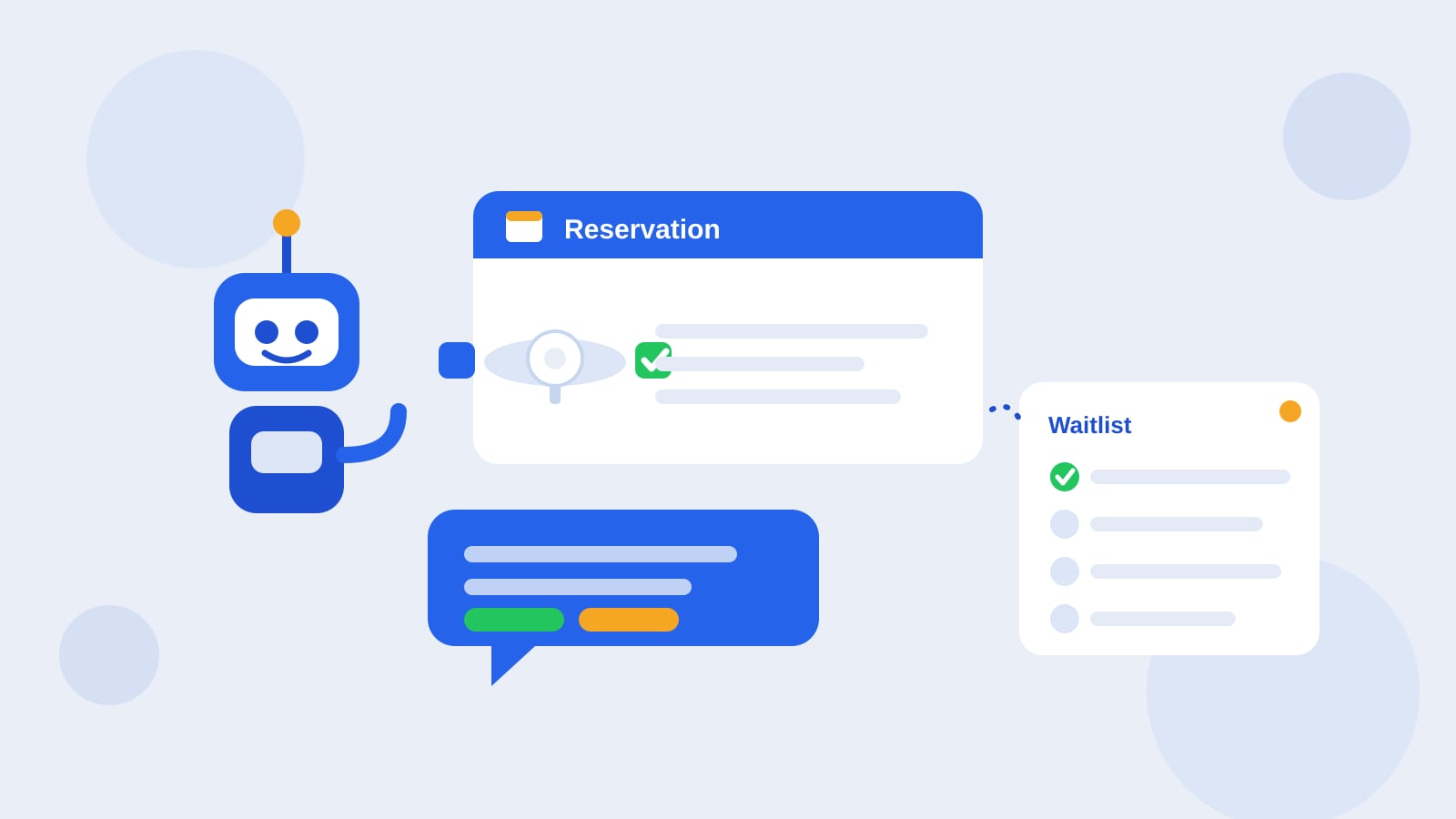
The quietest way a restaurant loses money
A no-show does not make a scene. The party simply never arrives, the table sits set and empty through your busiest ninety minutes, and the waitlist that could have filled it has already gone home. No refund, no complaint, nothing to dispute. Just a gap in the night where revenue should have been, repeated often enough that it stops feeling like an accident and starts looking like a line item.
Exactly how big that line item is depends on how you count. Resos's 2026 No-Show Index, drawn from 3.77 million advance reservations, recorded an average no-show rate of 2.33 percent, while broader industry estimates run much higher and most published figures come from companies that sell booking software. Pick your own number if you track it. The point is that the fix is not a better guilt trip. It is a system that works the reservation from the moment it is made to the moment the guest is seated, without a host standing at a terminal doing it by hand.
That system is a good fit for an AI employee, because the work is frequent, rule-based, and mostly low risk, with a few moments that genuinely need a human. Here is the playbook.
Step 1: A reminder cadence that actually lands
Most no-shows are not malice. They are a booking made three weeks ago and forgotten by Thursday. A steady cadence closes that gap: a confirmation the moment the reservation is made, a friendly nudge the day before, and a short same-day check that invites a quick reply. Kolo drives the reservation system you already use to send that sequence for every booking, over the channel the guest chose when they booked.
The reminder is not a wall of fine print. It names the party, the time, and one easy action: confirm, or tap to change. A guest who confirms is far likelier to show. A guest who cannot make it now has a frictionless way to tell you, which is the whole game, because a cancellation you hear about on Tuesday is a table you can still sell on Friday.
Step 2: Make rescheduling the easy path
The silent no-show happens when canceling feels worse than ghosting. So the reschedule has to be one reply away. When a guest replies that plans changed, Kolo reads it in your booking system, offers real open times from your book, and rebooks them, rather than leaving them with a phone number that rings during service. You keep the guest, you free the table while there is still time to fill it, and nobody had to feel bad about it.
This is where a team AI employee beats a one-way reminder blast. The conversation goes both ways. A guest asks to move from four people to six, or from 7:00 to 8:30, and Kolo checks the book, proposes what fits, and handles the change end to end, flagging only the cases that need a manager's eye.
Step 3: Backfill the open table from your waitlist
A recovered cancellation is only worth something if you refill the slot. The instant a table opens, whether from a cancellation or a confirmed no-show window passing, Kolo works down the waitlist through the same system: it reaches the next guests who wanted that night, offers the time, and confirms the first to say yes. On a packed Saturday that turns a dead two-top back into a paying one before the kitchen even notices the gap.
Doing this by hand is why it usually does not happen. A host mid-rush is not going to text six waitlisted parties to backfill one table. An AI employee does it in the background, in seconds, while the floor stays on the floor.
Step 4: Protect the bookings you cannot afford to lose
Not every reservation carries the same risk. A two-top on a slow Tuesday is cheap to lose; a twelve-top on New Year's Eve is not. For those high-value bookings you can add a deposit or card hold, and let Kolo explain it plainly at the time of booking so there are no surprises at the door. Reserve the heavier friction for the nights and party sizes where a single empty table reshapes the whole service.
The math of one table a night
You do not need an industry report to see the return. Take your average check, multiply by a typical party, and that is the value of one table. Recover one otherwise-dead table per night and run the number across a full year of service. For most rooms it is not a rounding error; it is a part-time salary, or the margin that decides whether a slow quarter is survivable.
That is the quiet case for working no-shows seriously. The upside is not dramatic on any single night. It compounds. One recovered table on Monday, two on Saturday, a backfilled cancellation on the night you were fully committed, week after week, into real money by the end of the year.
See the slow night coming
Everything so far works each booking as it arrives. The other half of a calm service is reading the night before you build the schedule. Kolo can learn that from your own numbers: a Skill reads your past sales out of the point-of-sale system you already run, lines each day up against the weather it brought, and turns the pattern into a seven-day sales forecast. With secure credential storage, it pulls that history from the popular POS systems and, now, from almost any other tool you sign into.
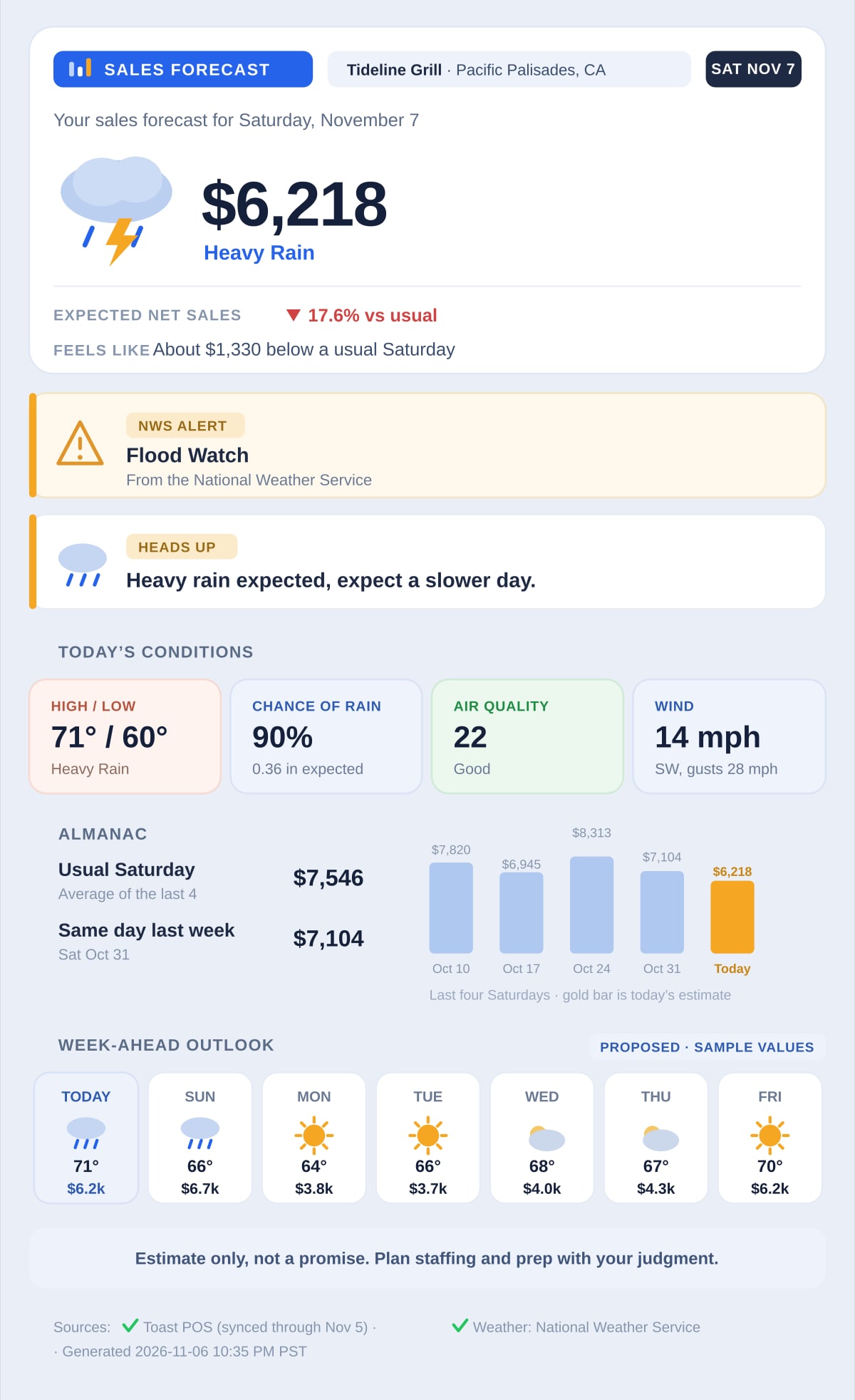
A heavy-rain Saturday that usually runs light is a Saturday you can staff for, instead of scheduling a full floor and sending people home at eight. The forecast is an estimate, not a promise, so the final call on staffing and prep stays yours. And a soft, wet night is exactly when a no-show stings most, so the same forecast tells you which evenings to lean hardest on confirmations and the waitlist.
Keep a person on the messages that matter
An agent that messages your guests touches your reputation, so the control model is the point. Kolo proposes, and you decide how much runs on its own. Routine confirmations and reminders can send without you; the unusual cases wait for a nod. You run that approval from wherever you are, including by text, so a flagged message gets a yes from the floor or the car without opening a laptop. Each person on your team has their own Kolo in one shared workspace, with roles that decide who approves what, and every message Kolo sends is captured in an exportable Audit Trail you can filter and review later. You get the speed of automation on the boring parts and a human hand on the parts that carry risk.
Start the agent on confirmations and reminders, where the risk is low and the payoff is immediate. Add rescheduling and waitlist backfill once you trust the cadence. Keep approvals on anything touching a deposit, a VIP, or a large party for as long as you want them.
To see the no-show playbook running against your own book, Book a Demo.
Frequently asked questions
How much can reminders really cut no-shows?
The honest answer is "some, not all." In Resos's 2026 No-Show Index, reservations that received a delivered SMS reminder showed about a 16 percent lower recorded no-show rate than ones that did not. That is an observed association, not a guarantee, but a reliable reminder cadence paired with an easy way to cancel is the cheapest lever most restaurants have.
Will Kolo message my guests on its own?
Only within the limits you set. Kolo scores each action low, medium, or high risk and pauses the higher-risk ones for a person to approve. You can let routine confirmations and reminders send on their own while holding anything unusual, like a message to a VIP or a change to a large party, for sign-off. Every message is recorded in the Audit Trail.
Does this work with the reservation system I already use?
The guest messages go out through your reservation system, which already holds the bookings and the guests' contact details, and Kolo acts across the tools you run with 150+ integrations. You and your team run Kolo and approve flagged actions over SMS, Slack, the web app, or mobile. Confirm your specific booking platform against a live demo, since the right setup depends on which system holds your reservations and waitlist.
What about large parties and peak nights?
Those are the bookings worth protecting hardest. For high-value reservations you can add a deposit or card hold. In the same Resos index, bookings with a deposit or hold recorded a 0.80 percent no-show rate versus 2.47 percent for those with no payment required, again an association rather than proof, but a meaningful gap on the nights you cannot afford to lose a table.